

Confluence Google Drive Integration
Create a single source of truth with seamless syncing and real-time collaboration.
Read more


New to the SharePoint Agent for Confluence? If your day usually goes like this, open the page, read the summary someone wrote three months ago, jump to SharePoint, hunt for the source file, open it, skim it, come back to Confluence, then this article is for you. It walks through everything you need to get started: how to bring your SharePoint and OneDrive files onto the page with the SharePoint Connector macro, and how to ask the agent about them without leaving Confluence.
The SharePoint Agent is an AI extension built into SharePoint Connector for Confluence, working alongside Atlassian Rovo to connect your Confluence space to SharePoint and OneDrive. Instead of opening and reading through every attached or linked file yourself, just ask Rovo. When you ask, the agent pulls the file from SharePoint or OneDrive, extracts its text and hands it to Rovo. The app is built on Atlassian's Forge platform, and we never store your files' content.
The SharePoint Agent works only with files from SharePoint and OneDrive. Within those, it works from the files and folders your team has already connected in Confluence, not from your entire tenant. Two places matter:
The files and folders attached to the page you are viewing with the SharePoint Connector macro.
The root folders connected to the space in the SharePoint Connector file manager, so a shared team library connected there can also give the agent context.
In short, if a file or folder is already visible to Confluence from that page or space, the agent can see it too. If it isn't attached to the page or inside a folder connected to the space, the agent can't. If some of those folders need authentication first, the agent lets you know with this message: "I may not have access to all your files. One or more folders require authentication before I can search them. Head to the app's File Manager to connect them." Connect those folders in the SharePoint Connector file manager, then ask again. Very large files are read only in part: the agent answers from the first part and tells you the rest wasn't read.
Three things need to be in place, and the first two are one-time steps:
SharePoint Connector for Confluence is installed on the Advanced Edition, and at least one folder is connected to the space in the file manager.
Atlassian Rovo is active on your site. This is an Org admin step, and admins can check the current state on the Rovo activation guide before anyone starts asking questions.
The files you want to ask about are attached to the page with the SharePoint Connector macro, which is the part you do per page.
Once the first two are done, everyone in the space can use the agent without any setup of their own.
Useful resource: Manage Rovo access | Atlassian Support
This is the step that gives the agent something to work with. You add the SharePoint Connector macro and attach the files and folders you care about.
Open the page in edit mode and place the cursor where you want the files to appear.
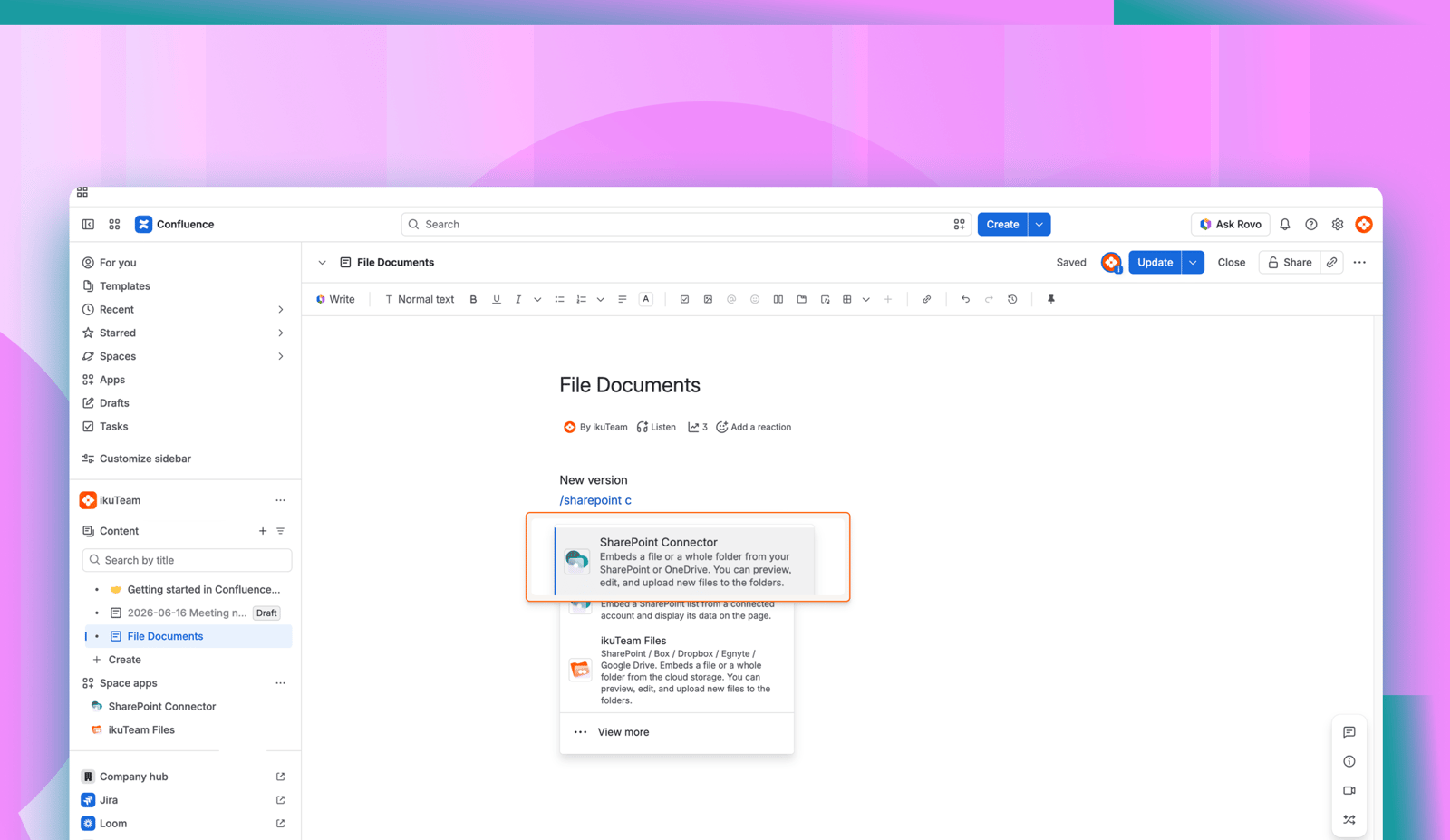
Type /SharePoint Connector, then select SharePoint Connector from the list.
Browse your connected folders. If none are connected yet, you can connect one from here, the same way you would in the file manager.
Click the checkbox next to each file and folder you want to attach. Your selections appear in the live preview pane on the right.
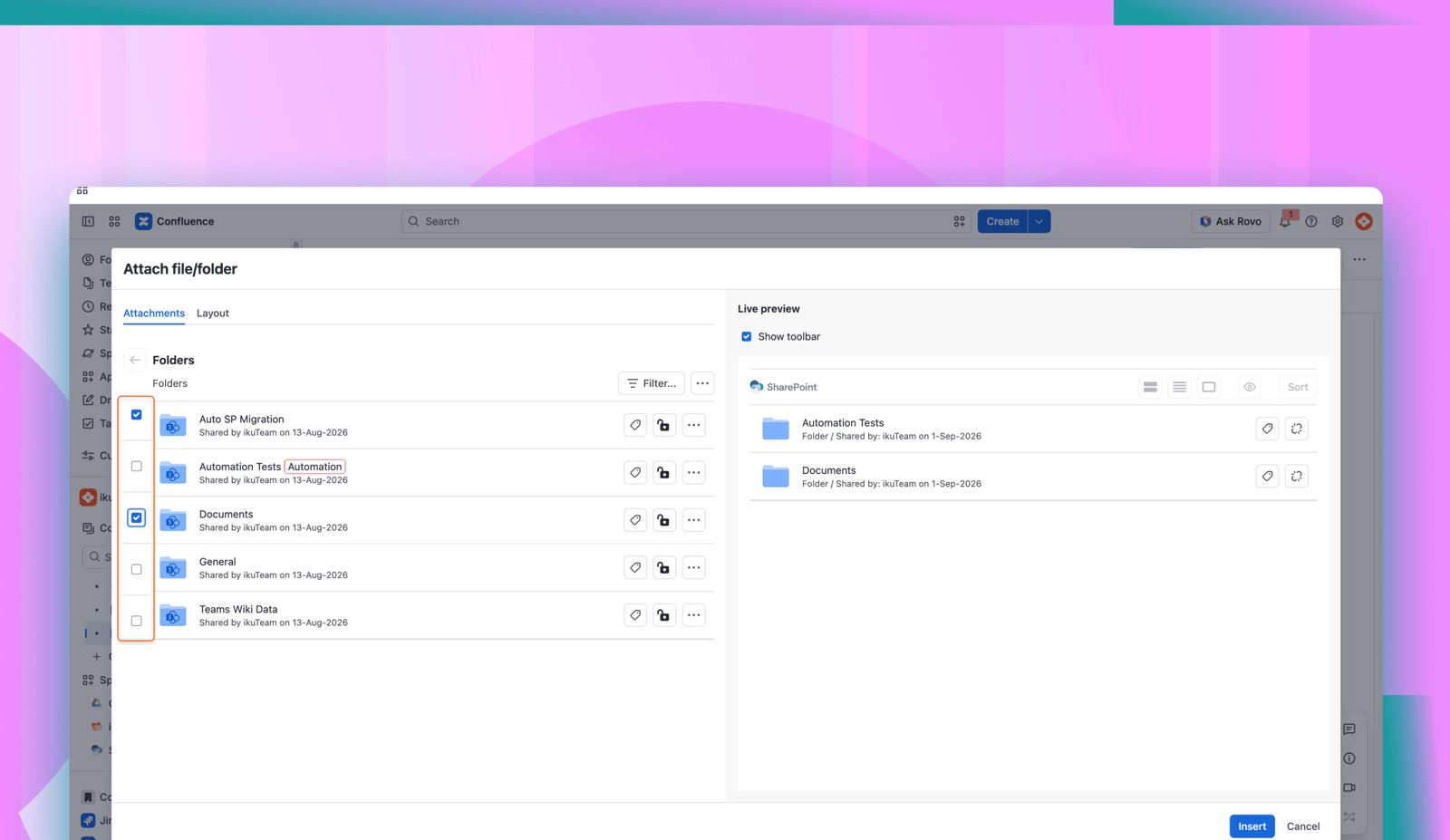
Click the Insert button, then publish the page.
Your files are now on the page, live from SharePoint, and the agent can read them.
Look for the Ask Rovo button next to the notification icon in your Confluence site.
Open Rovo Chat.
Switch to the SharePoint Agent.
Open the page whose files you want to ask about, then start typing, the same way you would message a teammate.
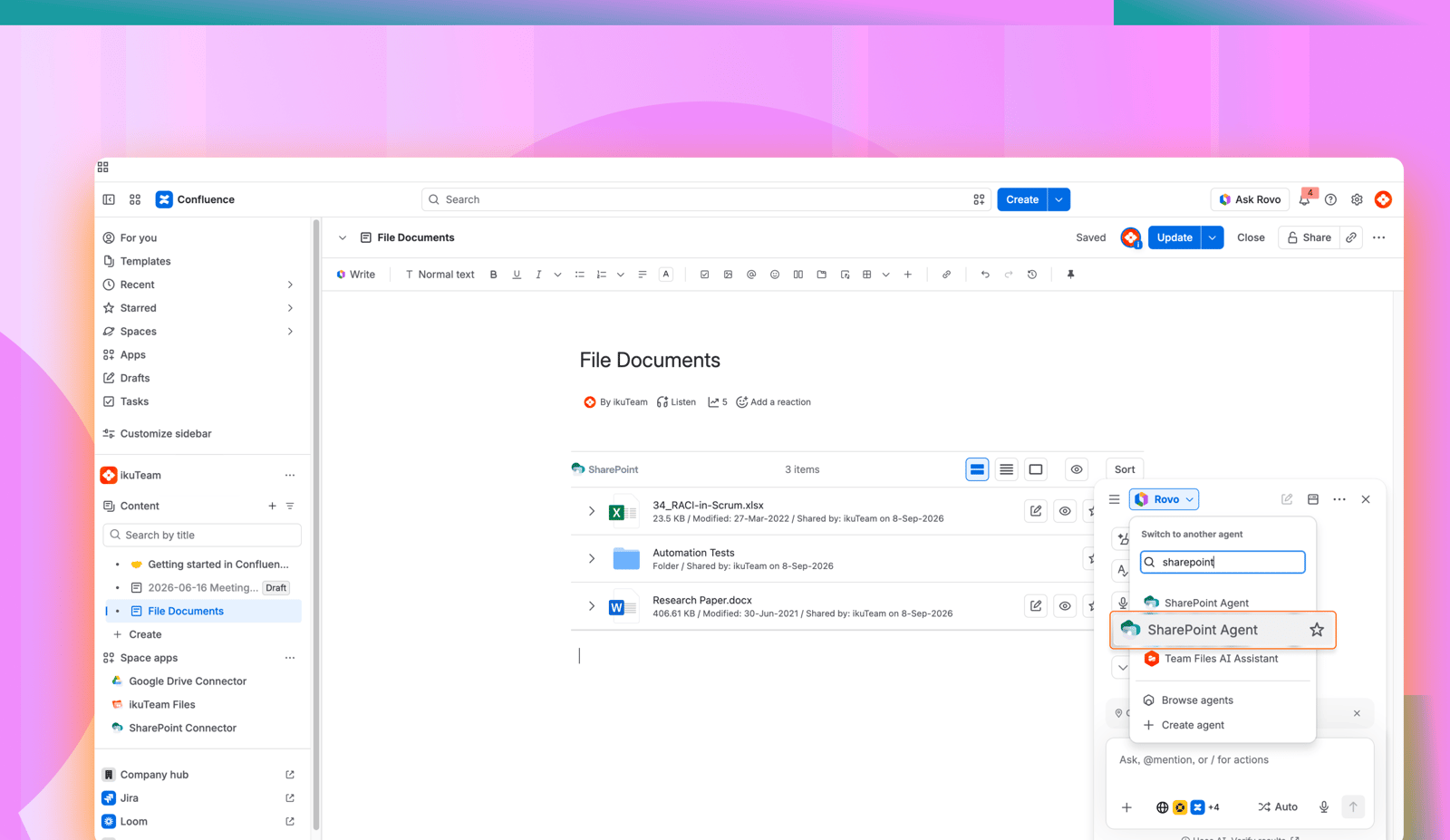
You can ask anything that points to a specific page, space, or file.
A few examples to get you started:
"What are the files attached to this page?"
"Find the file named Budget in this space."
"Summarize TestCases.xlsx."
"What are the key takeaways from the meeting notes attached to this page?"
"Summarize the requirements doc attached here, and list anything that looks like a technical constraint."
Beyond answering one question at a time, the agent can summarize long PDFs, Word documents, Excel sheets, and PowerPoint files your team keeps in SharePoint and OneDrive, without you opening them. It answers questions about those files without you leaving Confluence, quoting the relevant part where it helps, and it can find a file by name on the page or across the folders connected to your space.
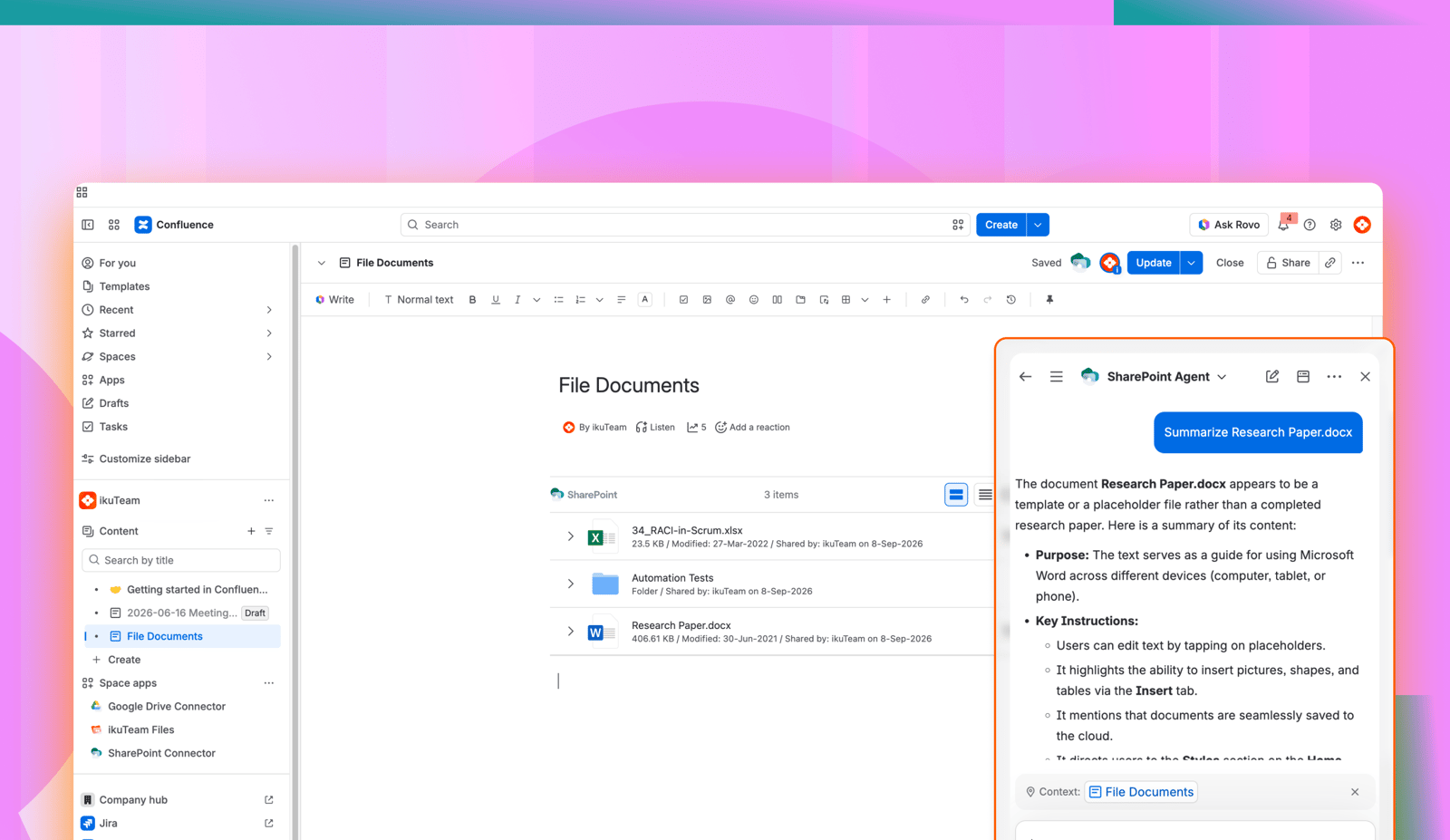
In this article, you learned everything you need to get started with the SharePoint Agent in Confluence: how to attach your SharePoint and OneDrive files to a page with the SharePoint Connector macro, what the agent can see, and how to ask it questions in Rovo Chat.
If you still have questions about the SharePoint Agent, visit our support portal and send them to us. Our team is always happy to help.


