

Confluence Google Drive Integration
Create a single source of truth with seamless syncing and real-time collaboration.
Read more


Learn how to set permissions for connected folders.
You can set different permissions for each connected folder, controlling who can view, edit, or download its content. These work similarly to Confluence page permissions, so if you're already familiar with those, you'll feel right at home.
One important thing to know: these permissions are independent of the sharing settings in Google Drive. How the two layers interact depends on Mirror Storage Permissions, which is ON by default (admins can turn it off). Learn more in 3.1 Admin settings.
You can set permissions when connecting a folder in the "Permissions" tab or from the File Manager at any moment by clicking the lock icon.
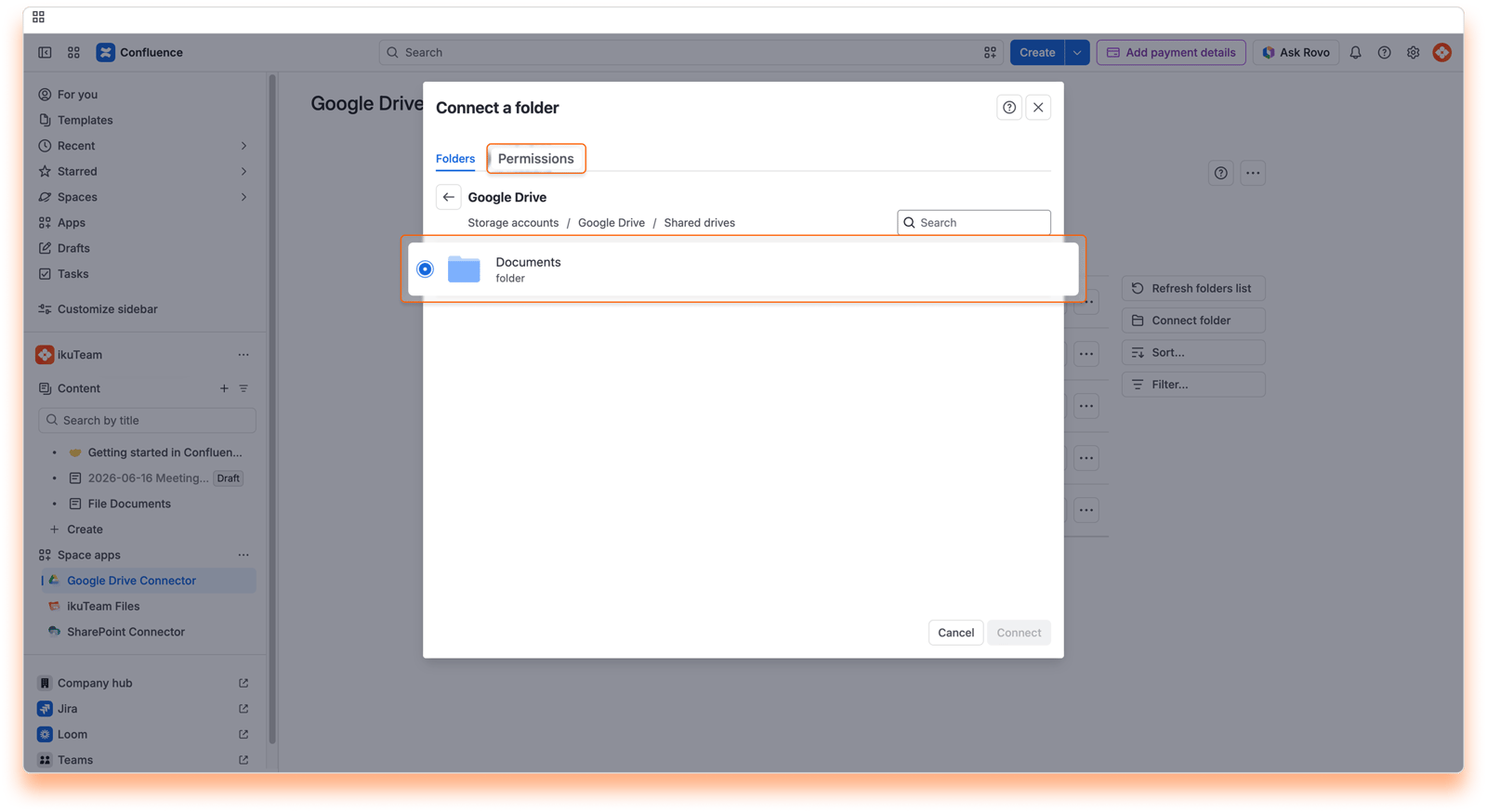
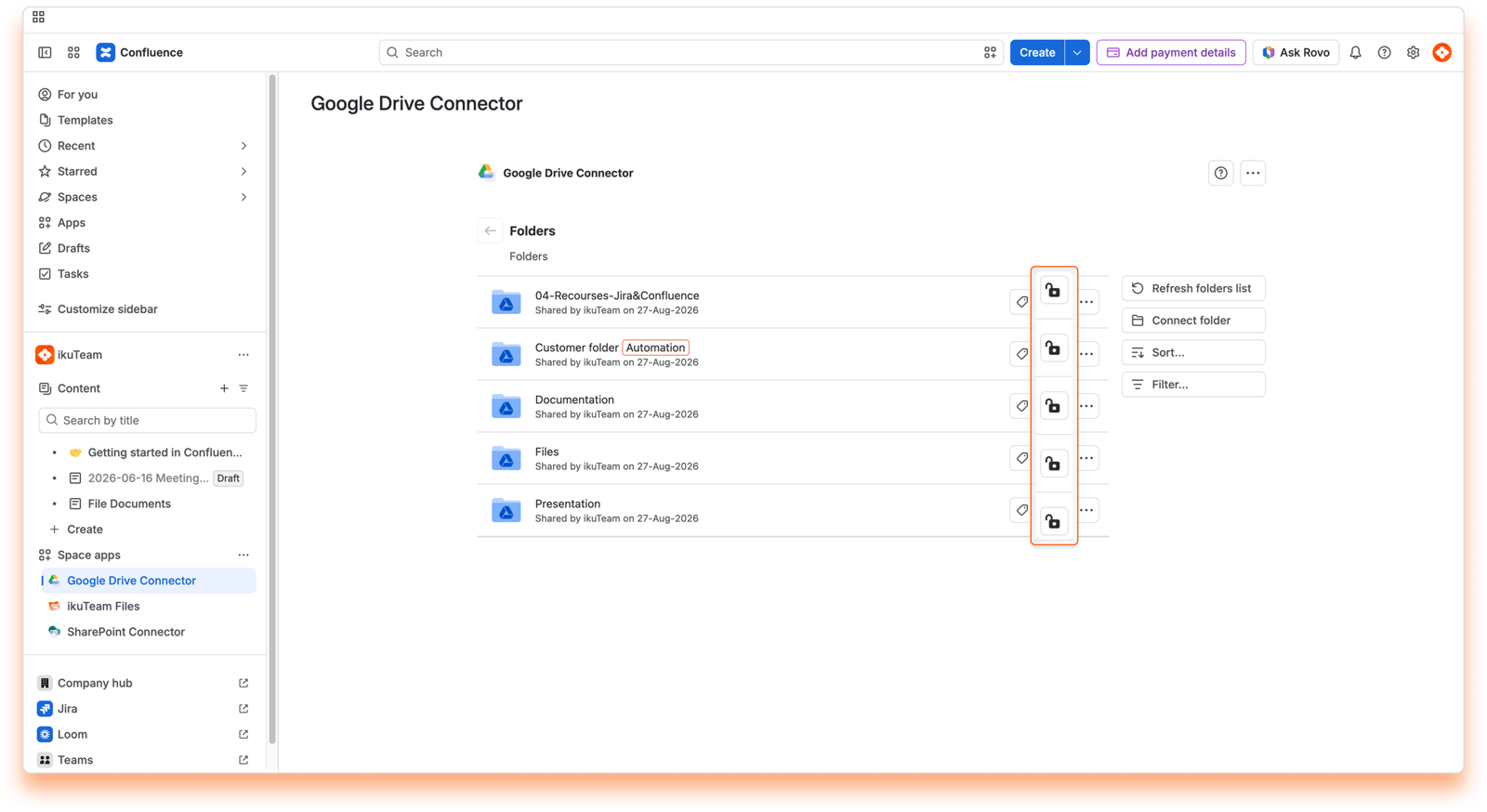
The "Permissions" tab shows the current settings and how they affect your connected folder.
There are three main options that you can select from the drop-down menu:
It is the default option, which means everyone with access to the Confluence Space can view and edit the content of the connected folder.
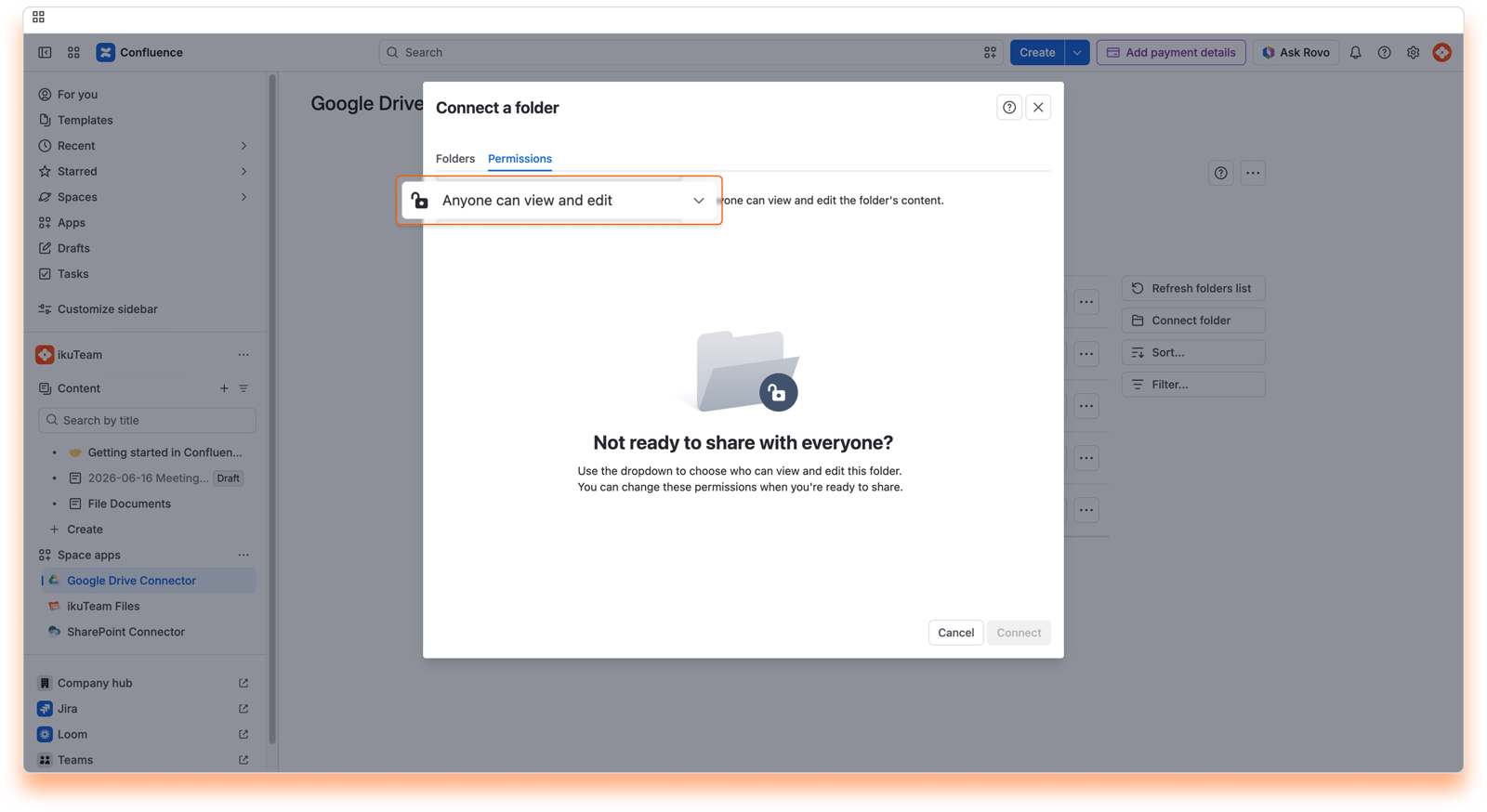
Everyone can view the folder and its content, but only the person who connected it (the owner) can edit it. The owner can also grant permission to download files or edit documents to specific people, groups, and roles.
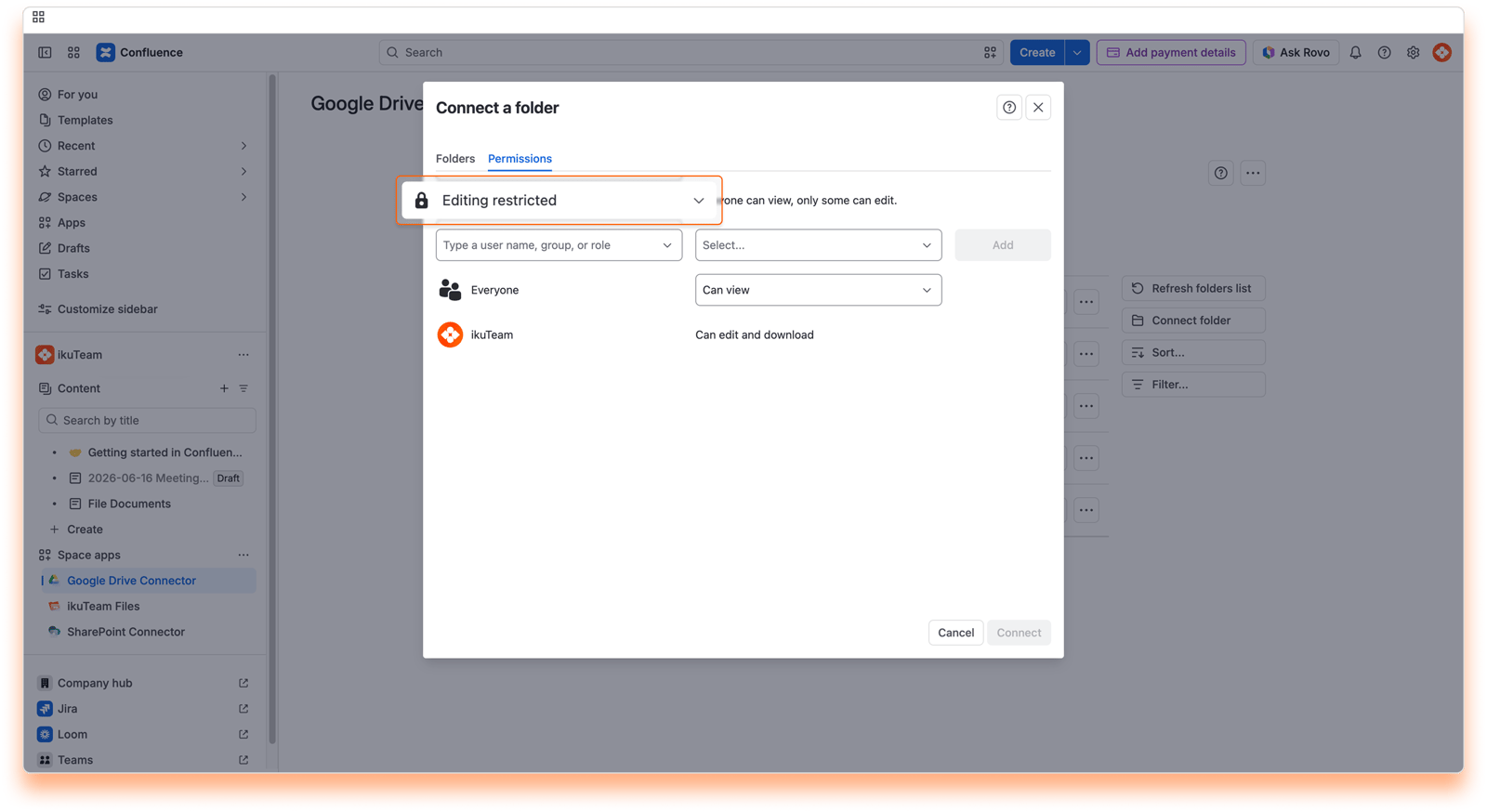
No one else has access to the folder; only the owner can view it and edit its content. Only people, groups, or roles added by the owner will have permission to view the folder or edit its content.
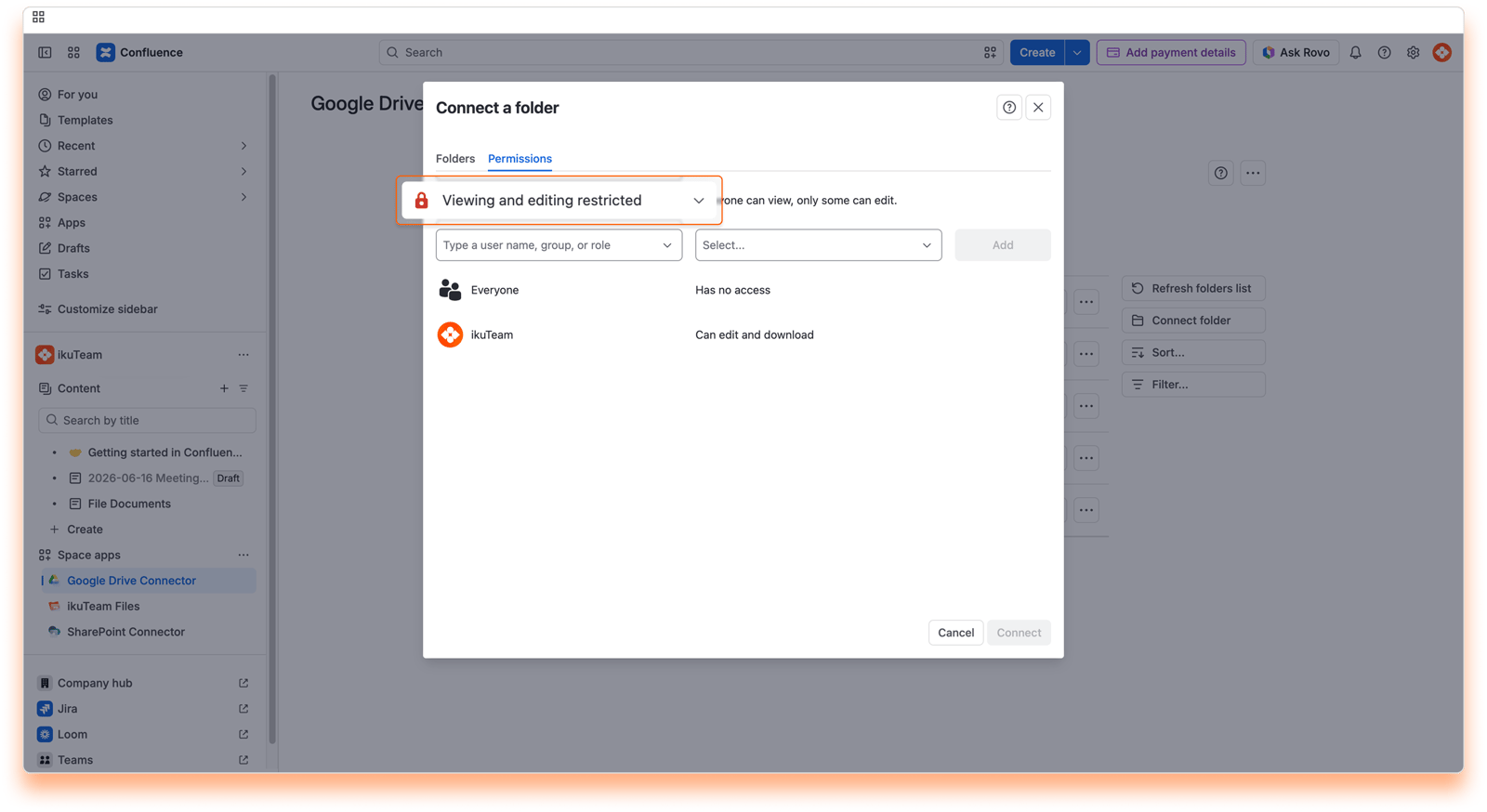
Select the "Editing restricted" or "Viewing and editing restricted" option from the combo box. New fields appear, and a list of the current permissions shows what "Everyone" and the owner can do with the folder:
Click the input box to start typing a name, group, or role, or select one directly from the menu.
Select the permission to grant: "Can view and download" or "Can edit and download". With "Viewing and editing restricted", you can also choose "Can view".
Click the "Add" button.
The list will be updated to include the new addition. You can add as many entries as you need and click the "Connect" button (when connecting a folder) or the "Apply" button (when editing permissions).
The permissions modal allows you to change any person's permissions, group, or role. The connected folder owner can change the permissions anytime by returning to the permissions modal. The owner can add more people and groups or revoke granted permissions by clicking the "Remove" button.
Please keep in mind that permissions are additive. If a person can only view a folder as an individual and is part of a group that can edit, this person can edit the folder, as the Google Drive Connector for Confluence app combines all the permissions.
Files and folders attached to pages will only be visible to people with permissions granted in the folder.
Files and folders attached to pages with the macro always follow the connected folder's current permissions. When you change the folder's permissions, the attachments on your pages use the new permissions right away, so you don't need to attach them again.
Mirror Storage Permissions is ON by default in Google Drive Connector for Confluence, so access follows the permissions set in Google Drive. Admins can turn it off for simplified access. With Mirror Storage Permissions OFF, the app uses the folder owner's Google account and overrides the file permissions set in Google Drive for folders connected to Confluence. Google Drive itself stays unchanged and keeps the permissions set there.
With Mirror Storage Permissions ON, each user authenticates with their own Google account that has access to the connected folders, so the permissions set in Google Drive are respected. Use the "Mirror Storage Permissions" setting with folder permissions to better control how files are shared, viewed, and edited.
NOTE: With Mirror Storage Permissions ON, access to files follows the permissions set in Google Drive. However, Confluence permissions always take final precedence. If a user doesn't have access to a space or page, they won't be able to see or interact with the files attached to it, regardless of their Google Drive permissions.
In short, Google Drive permissions control what files are accessible, but Confluence permissions decide who can see them.
Now you know how to set permissions for your connected folders. Don't forget you can connect more folders from the file manager.
If you still have questions about the topics covered on this page, visit our support portal and send them to us. Our team is always happy to help.


