

Confluence Google Drive Integration
Create a single source of truth with seamless syncing and real-time collaboration.
Read more


Learn how to create and edit documents, spreadsheets and presentations with ikuTeam Office for Confluence.
You can edit the documents, spreadsheets and presentations attached to your pages without downloading them, re-uploading copies, or locking other people out while you work.
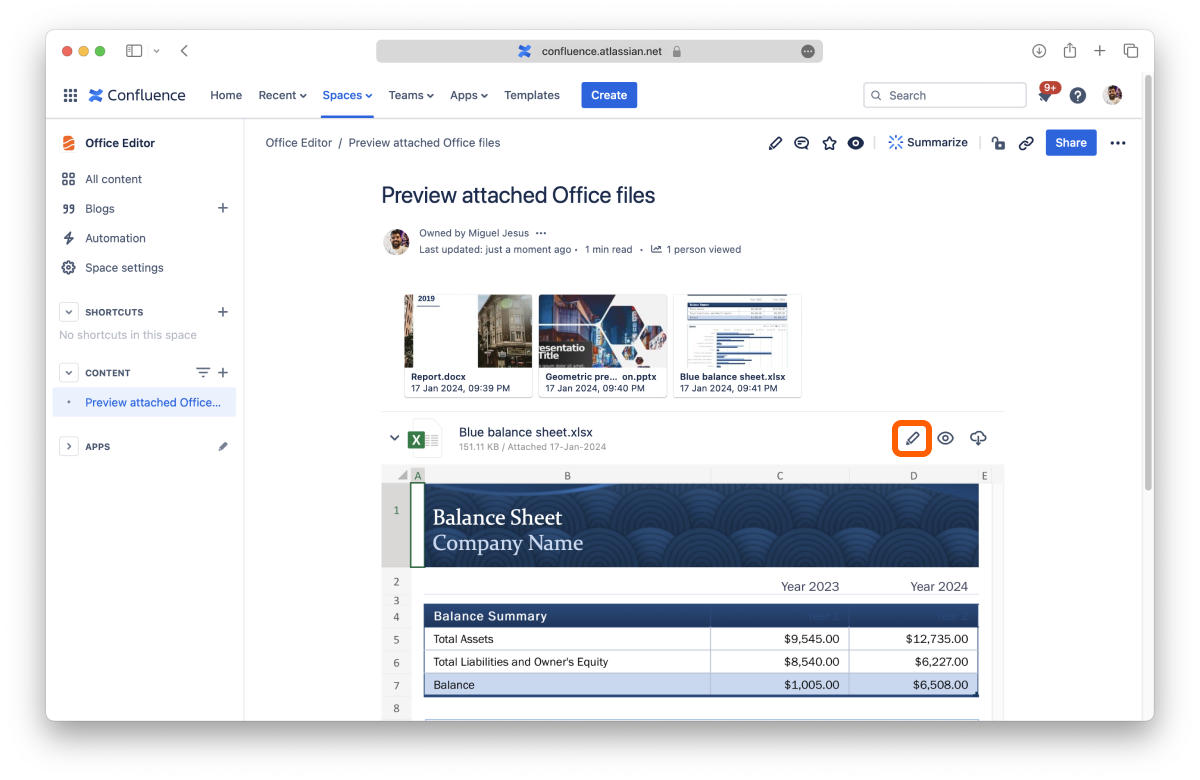
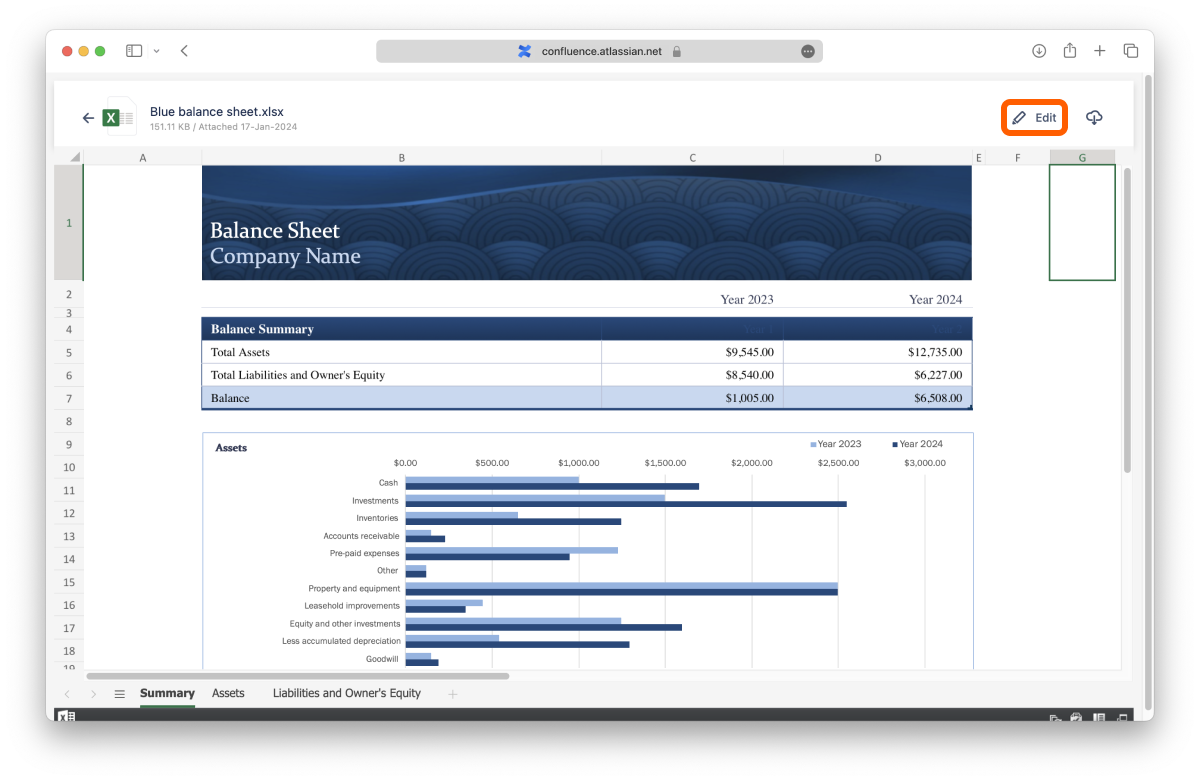
To edit a file attached to your page, click its Edit button (also available in the full-screen preview).
The ikuTeam Office engine opens on the same tab, right inside Confluence, and you can edit your document in a few seconds.
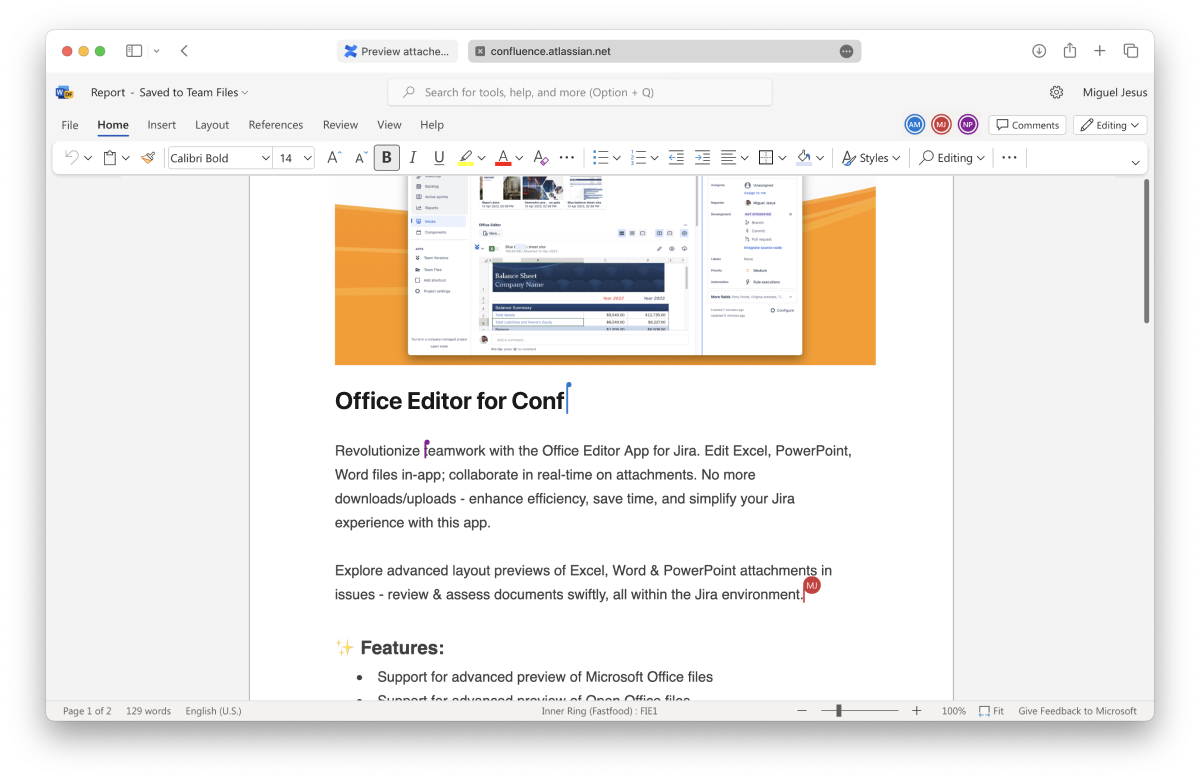
When editing a Microsoft Office document, spreadsheet, or presentation, you and your team can work together, as the ikuTeam Office engine supports real-time collaboration, so there are no file lockdowns. There's also an autosave feature, so you can close the editor when you finish.
OpenOffice documents work the same way as Microsoft Office documents, using the ikuTeam Office engine, and support real-time collaboration.
As mentioned before, Microsoft Office or OpenOffice Documents support real-time collaboration, and it's effortless to use.
Start editing a document that is attached to a page. When another person clicks to edit the same document, the editor creates a collaboration session seamlessly. You can continue to edit the document as before and leave it anytime by closing the editor.
You can create a new Word document, Excel spreadsheet or PowerPoint presentation right from the macro:
In the macro's toolbar, click New....
Choose the Document type: Word Document, Excel Spreadsheet or PowerPoint Presentation.
Enter a Document name and click Create.
The new file is attached to the page and shows up in the macro, ready to edit. If it doesn't appear, edit the macro and add it to the list of files.
You can also attach an existing file by dragging it into the macro, one file at a time, up to 100 MB. To create or upload a document from anywhere in Confluence, use the Workspace Overview.
The toolbar shows when Show toolbar is selected in the macro settings. See 2.3 Layout options.
Word documents and templates: DOC, DOCX, DOCM, DOT, DOTX, DOTM
Excel spreadsheets and templates: XLS, XLSX, XLSM, XLSB, XLT, XLTX, XLTM
PowerPoint presentations and templates: PPT, PPTX, PPTM, PPS, PPSX, PPSM, POT, POTX, POTM
OpenOffice documents and templates: ODT, OTT, FODT, ODS, OTS, FODS, ODP, OTP, FODP
Older StarOffice and WPS Office files: SXW, STW, SXC, SXI, WPS, WPT, ET, ETT, DPS, DPT
Text and web files: RTF, TXT, CSV, HTML, HTM, MHT, MHTML, XML, LOG, CONFIG
E-books: EPUB, FB2
XPS, OXPS, DJVU, DOCXF and OFORM files
PDF files: edit, annotate and sign, with the Advanced Edition
To edit an attachment, you need permission to edit the page. The same goes for deleting a file from the macro (open its File actions menu and click Delete). People who can only view the page can preview the files, but not edit them.
Page editors can also turn off editing or downloading in a single macro. See 2.4 Macro permissions and file versions.
That's all for editing files attached to your pages.
If you still have questions about any topics covered on this page, visit our support portal and send us your questions. Our team is always happy to help.


